

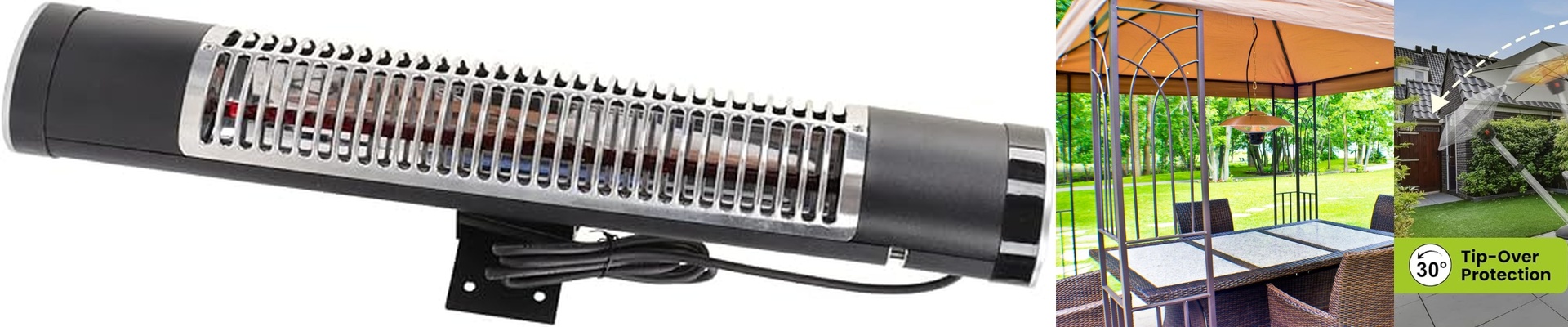

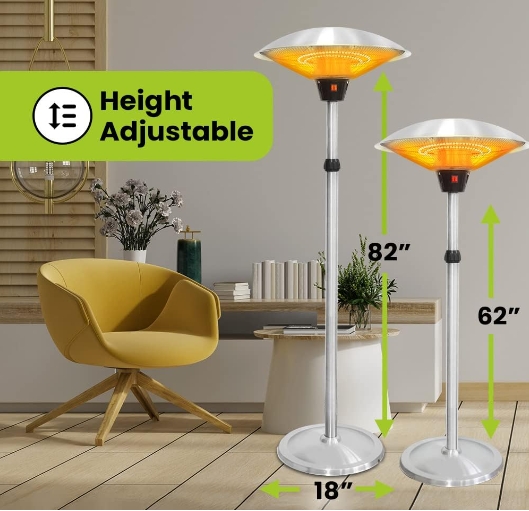
Cold floors and numb toes aren’t just annoying—they’re your body hoarding heat and leaving your extremities in the cold. In winter, that tight, dead feeling hits fast, and standard air heating usually can’t keep up. Infrared electric heaters flip the script by warming people and surfaces directly, not just the air between.
What matters under the hood
We lean on short-wave infrared with a quartz element to deliver radiant warmth that travels straight to the target—skin and clothing—without getting hung up. The heat shows up in seconds, with no warm-up lag. Output is typically 800–1500 W, and it runs off a standard 120 V outlet, so you’re up and running with minimal hassle. A built-in thermostat holds your comfort zone, while tip-over protection and a cool-touch housing keep day-to-day use solid and safe.
Why this approach works
Infrared warmth is gentle, even, and directional. It penetrates superficially, which helps get blood moving in the extremities and eases the stiffness that comes with cold hands and feet. If you’re working, reading, or just trying to relax in a chilly room, that means fewer shivers, less fidgeting, and a calmer body response. The heat stays where you need it, so you feel cozy faster without roasting the whole space—perfect for spot heating right where you sit.
What you should keep in mind
Infrared heaters work best in direct line of sight. Position the unit to hit the torso and lower limbs, not just the feet, for even comfort. Keep a clear safety zone of at least 3 feet around the heater, and don’t run it in damp areas unless the model is rated for it. Air doesn’t carry the heat far, but objects warm up and re-radiate, so you’ll often feel warmth even after the heater cycles off. For whole-room comfort, pair it with gentle convection; for targeted relief, infrared is hard to beat.