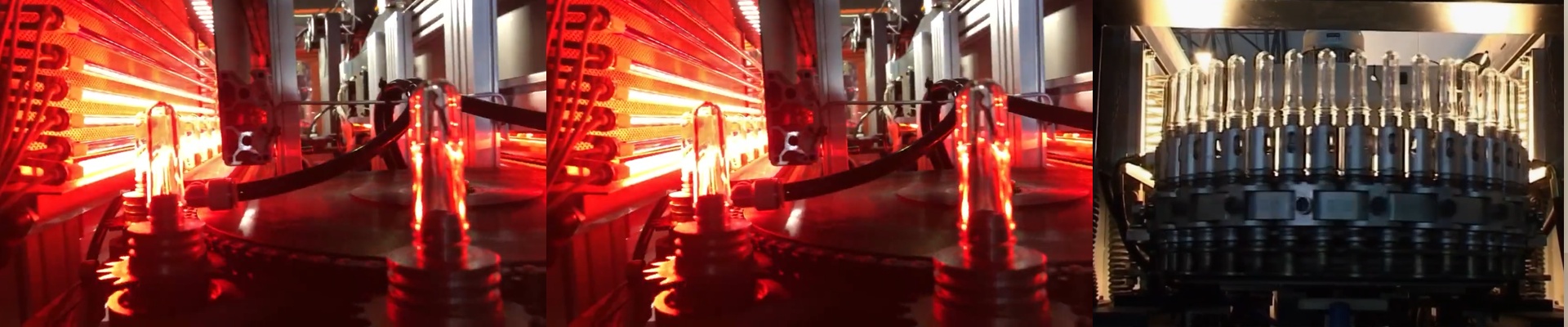
When the heating tunnel on your blow molder starts drifting, the whole line pays for it. You get slowed cycles and preforms that come out inconsistent. We build infrared heating assemblies to take that uncertainty out and give you repeatable heat profiles—and uptime you can plan around.
What matters under the hood
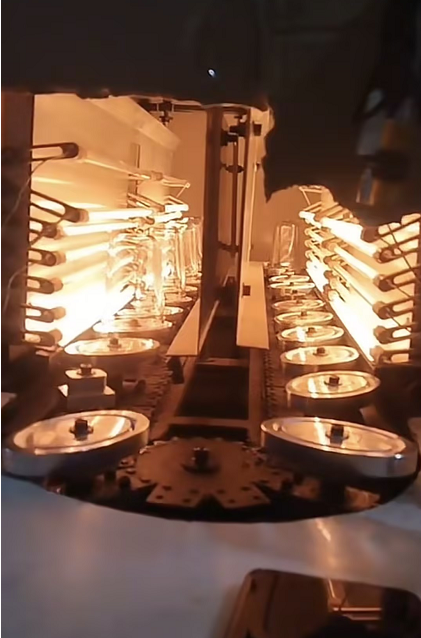
We use quartz infrared emitters that respond fast and hold steady across the preform heating window. Power is matched to the OEM voltage and watt density, so the curve plugs into your blow molding machine control without fighting it. The interfaces are practical: R7s sockets, the right lead lengths, and mounting brackets that keep the heating zone aligned. Emitter geometry is chosen to spread coverage evenly—no hot spots—and the reflector design puts the energy where the preform needs it, not bleeding off into the frame.
Why this matters on the line
Preform heating sets the pace in stretch blow molding. If the heat is off, you end up chasing stretch ratios and blow pressures. Too aggressive, and you get crystallization and weak necks. Bring the temperature back under control and the line settles. You hold cycle time with fewer scrap bottles. Energy use drops because the emitters come up fast and stay stable. Replacement intervals stretch, thanks to solid filament support and thermal management. The day-to-day payoff is simple: fewer call-outs, fewer parameter tweaks, and bottle weight and clarity that stay consistent.
What to watch for
Installation is straightforward, but the heating zone is sensitive to spacing and alignment. We provide exact dimensional drawings, and it pays to double-check reflector position and airflow before startup. Ambient dust and cooling air can affect emitter life. In dirty environments, schedule inspections around 3,000–5,000 hours and keep spares close. We can configure the assembly for your specific machine and bottle recipe, so you land on the right heat profile without trial-and-error.